
A motor vehicle accident can happen in just a few seconds, but the physical, financial, and emotional effects can continue long after the crash.
If you have been injured in a car accident, you may have questions about your medical care, insurance claim, documentation, and what steps you should take next. Understanding the process can help you organize important information and explore the options available to you.
This guide explains what to do after a motor vehicle accident injury, common injuries that can occur after a crash, and important considerations when exploring an injury claim.
What Is a Motor Vehicle Accident Injury Claim?
A motor vehicle accident injury claim is a request for compensation or benefits related to injuries or losses resulting from a vehicle crash. Depending on the circumstances and the state where the accident occurred, the process may involve insurance companies, medical providers, attorneys, or other parties.
Every accident is different. Factors such as who was involved, how the accident occurred, the injuries sustained, available insurance coverage, and applicable state laws can affect the claims process.
If you were injured in a crash, gathering accurate information early can help you understand your situation.
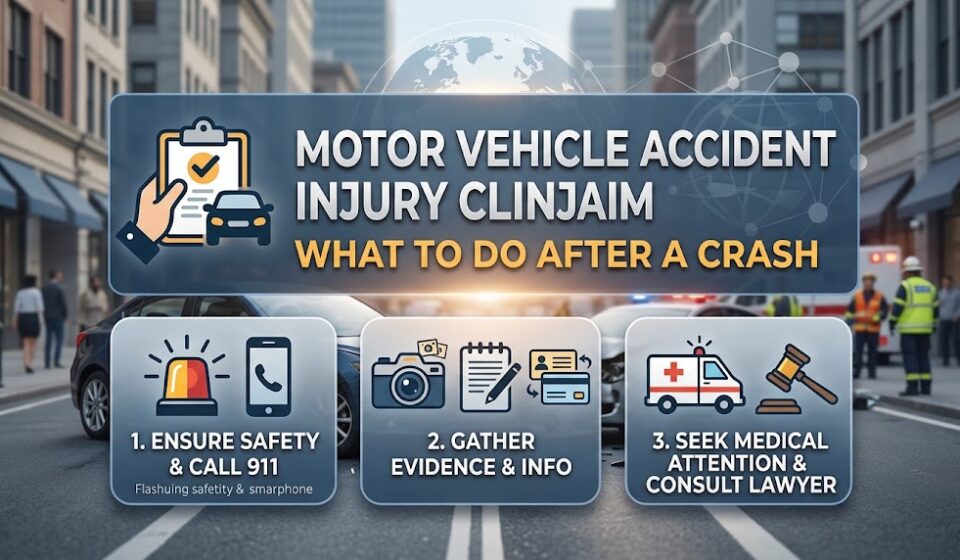
What Should You Do After a Motor Vehicle Accident?
After an accident, your first priority should be safety and medical care.
1. Check for Injuries
If you or anyone else is seriously injured, seek emergency medical assistance immediately.
The National Highway Traffic Safety Administration recommends seeking medical attention after a crash even if you initially believe you are not injured.
Some injuries may not be obvious immediately. For example, concussion symptoms can appear immediately or develop hours or days after a head injury.
2. Report the Accident
Depending on the circumstances and local requirements, you may need to report the accident to law enforcement.
A police or crash report can contain important information about the location, vehicles, people involved, and other details related to the accident.
3. Exchange Information
When it is safe to do so, collect relevant information from the other driver or drivers, including:
- Name
- Contact information
- Driver’s license information
- Insurance information
- Vehicle information
- License plate number
If there are witnesses, their contact information may also be useful.
4. Document the Accident Scene
If you can safely do so, take photographs or videos of:
- Vehicle damage
- The surrounding area
- Road conditions
- Traffic signs or signals
- Visible injuries
- Property damage
Keep copies of documents related to the accident and your medical treatment.
Common Injuries After a Car Accident
Motor vehicle crashes can result in many different types of injuries. Some may be immediately noticeable, while others may develop later.
Common accident-related injuries can include:
- Neck injuries and whiplash
- Back injuries
- Shoulder injuries
- Broken bones
- Sprains and strains
- Cuts and bruises
- Head injuries
- Concussions
- Traumatic brain injuries
- Spinal injuries
- Soft-tissue injuries
According to the CDC, motor vehicle crashes resulted in more than 2.8 million emergency department visits for injuries in the United States during 2023.
Injuries May Not Always Be Immediately Obvious
After a crash, adrenaline and stress can make it difficult to recognize certain symptoms.
For example, CDC guidance notes that concussion symptoms can include headaches, dizziness, nausea, vision problems, difficulty concentrating, memory problems, and sleep changes.
If you experience concerning symptoms after an accident, seek appropriate medical attention.
Why Medical Documentation Can Matter
If you are pursuing a motor vehicle accident injury claim, documentation of your injuries and treatment can be important.
Keep records such as:
- Emergency room records
- Doctor visits
- Diagnostic testing
- Prescriptions
- Medical bills
- Physical therapy records
- Follow-up appointments
- Work absence documentation
You should also follow your healthcare provider’s instructions and keep track of how your injuries affect your daily activities.
What Information Should You Keep After an Accident?
Creating an accident file can make it easier to organize your information.
Consider keeping:
Accident information
- Date and location
- Police report information
- Driver and insurance details
- Witness information
- Photos and videos
Medical information
- Diagnosis
- Treatment records
- Medical bills
- Prescriptions
- Follow-up appointments
Financial information
- Lost work information
- Repair estimates
- Other accident-related expenses
Keeping these records together can help you provide accurate information when discussing your situation with an insurance company or qualified professional.
How Insurance Can Be Involved in an Accident Claim
Insurance coverage can play an important role after a motor vehicle accident.
Depending on the circumstances, a claim may involve your own insurance company, another driver’s insurer, or other applicable coverage.
Insurance rules and requirements can vary significantly by state. Factors such as fault, policy limits, medical expenses, property damage, and the type of coverage available can affect how a claim is handled.
Because every accident is different, it is important to review the specific circumstances of your accident rather than assuming another person’s experience will be the same.
When Should You Explore Your Options After an Accident?
If you were injured in a motor vehicle accident, you may want to learn more about your options as soon as reasonably possible.
This can be particularly important if:
- You suffered significant injuries
- You needed emergency medical treatment
- Your injuries require ongoing care
- You missed work because of the accident
- Your vehicle suffered substantial damage
- An insurance company has contacted you about the accident
- You are unsure what steps to take next
Depending on your circumstances, speaking with a qualified professional may help you understand the process and the options available in your state.
What If the Other Driver Was at Fault?
If another driver’s actions contributed to the accident, you may have questions about insurance and potential compensation.
However, determining responsibility can depend on the specific facts of the accident and applicable state law.
Evidence such as police reports, photographs, witness statements, medical records, and other documentation may be relevant when determining what happened.
Avoid assuming that fault or compensation is guaranteed simply because another driver was involved.
What If You Were a Passenger?
Passengers can also suffer injuries in motor vehicle accidents.
If you were a passenger and were injured in a crash, you may have questions about which insurance coverage applies and what options may be available.
The answer can depend on the circumstances of the accident, the vehicles involved, insurance policies, and state law.
What If Your Symptoms Appear Later?
Not every injury is immediately obvious after a crash.
Some concussion symptoms, for example, can appear hours or days after an injury.
If you begin experiencing pain, dizziness, headaches, confusion, or other concerning symptoms after an accident, consider seeking medical attention promptly.
Do not ignore symptoms simply because you initially felt fine after the collision.
How Can You Start Exploring Your Accident Options?
If you were injured in a motor vehicle accident, you can begin by collecting your accident and medical information and learning about the options available to you.
You can also explore motor vehicle accident injury assistance through National Injury Assistance to learn more about your potential next steps.
Visit the website to learn more about available accident-related resources and request additional information based on your situation.
Frequently Asked Questions About Motor Vehicle Accident Injury Claims
How soon should I seek medical attention after a car accident?
You should seek appropriate medical attention as soon as possible after a crash, particularly if you have pain, symptoms, or any concern about an injury. NHTSA recommends seeking medical attention even if you initially do not think you are injured.
What are common car accident injuries?
Common injuries can include whiplash, neck and back injuries, fractures, sprains, soft-tissue injuries, head injuries, and concussions. The severity of injuries can vary significantly from one accident to another.
Can I make a motor vehicle accident injury claim?
Potentially, depending on the circumstances of the accident, your injuries, insurance coverage, and applicable state laws. A claim is not automatically guaranteed simply because an accident occurred.
What should I keep after a car accident?
Keep copies of accident reports, photographs, insurance information, witness details, medical records, medical bills, prescriptions, and other documents related to the accident.
Can accident injuries appear days later?
Yes. Some symptoms, including certain concussion symptoms, may appear hours or days after an injury.
What should I do if an insurance company contacts me?
Provide accurate information and keep records of communications. If you have questions about your rights or potential claim, consider speaking with a qualified professional familiar with the laws applicable to your accident.
Final Thoughts
A motor vehicle accident can create medical, financial, and practical challenges. Taking reasonable steps after a crash—such as seeking medical care, documenting the accident, preserving important records, and understanding your insurance situation—can help you stay organized.
If you or someone you know has been injured in a car accident, you can explore your motor vehicle accident injury options and learn more about the next steps available for your situation.
Important: This article provides general information and is not legal advice. Laws, deadlines, insurance rules, and available options vary by state and individual circumstances.